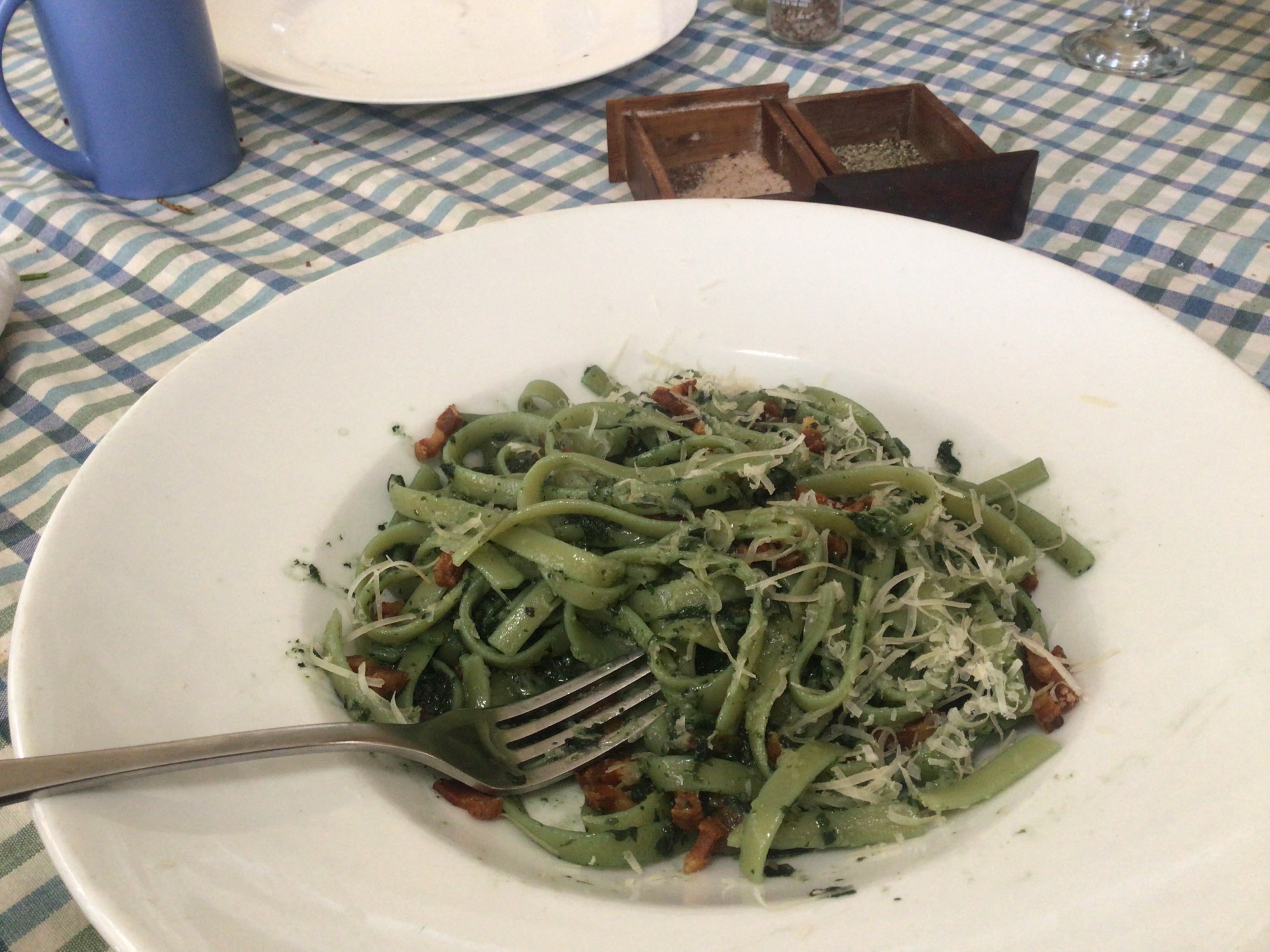
Riso Venere (Black Rice) con Gamberi alla Liguria

Liguria-Style Venere Black Rice with Prawns

As Lombardia (my region) does not have any sea access, we always look up to Luguria when it comes to seafood recipes. In Liguria, seafood is treated with great respect : simple preparation, excellent olive oil, fresh herbs, and bright citrus. This version reflects the coastal cooking of the Italian Riviera — clean, aromatic, and elegant, with no heavy sauces.


Ingredients (Serves 4)

  • 300 g Riso Venere (black rice)
  • 400 g raw prawns (preferably whole, shell-on for best flavour)
  • 3 tbsp high-quality Ligurian extra virgin olive oil
  • 1 clove garlic, lightly crushed
  • ½ glass dry white wine
  • Zest of 1 lemon
  • A few thin strips of lemon peel (no white pith)
  • Small handful fresh parsley, finely chopped
  • Small sprig fresh thyme or marjoram (optional but traditional)
  • Sea salt, to taste

Method

  1. Cook the rice
    Boil the Venere rice in abundant salted water according to package instructions (20–40 minutes). Drain well and spread on a tray briefly to steam off excess moisture.
  2. Prepare the prawns
    Peel and devein the prawns, keeping tails if desired. If using whole prawns, reserve shells to briefly flavour the oil.
  3. Infuse the oil
    Warm the olive oil in a wide pan over medium heat with the crushed garlic and (optionally) the prawn shells. Cook gently for 1–2 minutes to release flavour, then remove shells and garlic before they brown.
  4. Cook the prawns
    Increase heat to high, add the prawns, and sauté briefly — about 1–2 minutes per side.
  5. Deglaze
    Add the white wine and allow it to evaporate quickly, concentrating the flavour.
  6. Combine with rice
    Add the drained rice to the pan and toss gently so it absorbs the seafood juices and oil.
  7. Finish in the Ligurian style
    Remove from heat and add:
    • Lemon zest
    • Lemon peel strips
    • Chopped parsley
    • Thyme or marjoram (if using)
      Adjust salt and drizzle with a final thread of excellent olive oil.

To Serve

Serve warm — not hot — as is typical of Ligurian seafood rice dishes. The aroma of citrus, herbs, and the natural perfume of Venere rice should remain delicate and fresh.

La Stagione delle Ciliegie – The Cherry Season

Just when the cherry harvest was at its peak – and my friend and I arrived from Cromwell with around 200 kg of Cherries – soon our trusted Cherry Pitter decided to take a break. A little rebellion in the kitchen for more pay and variety!

Still, the bounty of the season did not go to waste. In the warm, fragrant kitchen, we quickly transformed the cherries into Cherry Wine, Cherry Cordial, Cherry Jam, Cherry Preserve and Cherry Grappa – treasures to carry the taste of summer through the year


🍷 Vino di Ciliegie — Cherry Wine, La Fattoria Style

In true Italian farmhouse fashion, our cherry wine is simple, hands-on, and made with love:

  1. Prepare the Fruit: Place pitted cherries in a clean fermentation vessel and cover them with boiling water
  2. Sweeten & Balance: Once cooled to room temperature, add sugar to taste and adjust the acidity as needed
  3. Add Life: Stir in wine yeast (Mangrove Jack’s MA33 and AW4) and yeast nutrients
  4. Ferment on the Must: Let it sit for about a week, stirring daily, allowing the fruit and yeast to mingle and awaken

If the yeast seems hungry, a little more sugar or nutrients keeps it happily working


🍶 Secondary Fermentation

  1. Strain and siphon the liquid into a clean demijohn (damigiana) with an airlock
  2. Watch as it gently bubbles away, slowly transforming into wine over several weeks
  3. When the fermenting slows, rack into a clean vessel and leave for about four weeks to ensure the wine is fully at rest

🍾 Bottiglia e Godimento — Bottling and Enjoying

Once the wine is clear and quiet, it is ready to:

Bottle – Seal – Label – Store

A simple, rustic cherry wine, carrying the warmth and charm of the Italian countryside – perfect for sharing with family, friends !!

QUAILS and LIGHTING PROGRAM

To maximise egg production in Coturnix coturnix Quails from 5 weeks of age through peak and sustained lay, lighting must be managed as a structured, consistent program – not left to chance

From 5 weeks of age, just prior to sexual maturity (first eggs typically appear at 6–8 weeks), gradually increase total day length to 15 – 16 hours per day. Extend light slowly, no more than 60 minutes per week, using timer-controlled supplemental lighting. Maintain moderate, even intensity at bird level (approximately 10 – 15 lux) – excessively bright lighting can trigger stress and aggression

Combine natural daylight with artificial lighting strategically. As natural day length changes seasonally, artificial lighting must be adjusted so total daily exposure stay on 16 hours. During transitional periods, light may need to be added both before sunrise and after sunset to “cap” the day length at a consistent 15 – 16 hours without overshooting as daylight expands.

Key principles for maximum production:

  • Maintain a consistent 15 – 16 hours total light (natural + artificial)
  • Never exceed 16 hours per day
  • Provide at least 8 hours of uninterrupted darkness for proper rest and hormonal balance
  • Never reduce day length once birds are in production, as this can trigger a drop in lay or induce molt
  • Adjust lighting gradually as seasons change
  • Use reliable timers to prevent sudden fluctuations

A stable, well-managed photoperiod stimulates ovarian development, supports early peak production, and sustains annual outputs of approximately 200–300 eggs per hen. Consistency in timing, intensity, and seasonal adjustment is the foundation of long-term, high-level performance

Alternatively, if you prefer, you can leave your quails to follow the natural seasons, but expect seasonal drops in laying during shorter winter days.

THE BYF COMPLETE QUAIL NUTRITION SYSTEM

FOUR PRECISION FEEDS

One Seamless Program – Proven, Consistent Results

At Back Yard Farmer, we reject one-size-fits-all feeds. Quail have precise, ever-changing nutritional demands through every life stage – and nailing those stages is what separates average flocks from exceptional performers with superior growth, vitality, fertility, and longevity. That is exactly why we developed and proudly offer a complete, life-stage-specific quail feeding system:

Starter → Grower → Breeder → Mature Maintenance

These four feeds are engineered to transition smoothly, eliminating nutritional stress, digestive upset, and guesswork. When used as a coordinated system, you get predictable outcomes: rapid, uniform growth • robust skeletal development • healthy, long-lasting breeders • exceptional shell quality • high fertility • and reliable, high hatchability.

Why the BYF System Delivers Superior Results

  • Smart, progressive balance of protein and energy – perfectly matched to each phase
  • Precise mineral control — avoiding dangerous over, or under supplementation
  • Consistent ingredients and formulation across all feeds for steady performance
  • Breeder-focused design — prioritising longevity and sustained productivity over short term burnout

This isn’t just a loose collection of feeds – it is a proven, integrated program born from real world quail breeding experience. Feed is not mere “fuel” It is the precise combination of proteins, fats, fibres, minerals, vitamins, and carbohydrates that drives health, reproduction, and hatch success.

Feed Stages at a Glance

Starter Feed

For chicks from hatch to 21 days
Kick-starts explosive early growth with high digestibility, optimal gut development, strong immunity, and rapid muscle formation. Produces uniform, well-framed juveniles without over-stressing tiny systems

Grower Feed


For birds from 22 days to 7 weeks
Moderates growth rate while building strong bones, solid structure, and lean body condition Prepares quail perfectly for maturity — avoiding excess fat or oversized/poor-quality eggs down the line

Breeder Feed


For all actively producing mature birds.
Optimised for peak fertility, outstanding shell strength, and top-tier hatchability. Supports consistent egg quality and long-term breeder health — maximizing production without sacrificing bird welfare

Mature Maintenance Feed


For non-laying mature birds
Promotes healthy molting, restores vital reserves, and conditions birds for peak performance in the next breeding cycle. Engineered for Exceptional Hatchability


When quail are fed exclusively on the BYF system and eggs are handled properly, nutrition-related hatch failures become extremely rare. Balanced amino acids, carefully calibrated minerals, and stable energy sources work in harmony to develop strong embryos and hatch vigorous, lively chicks

The Simple Rule for Success


Feed the right diet at the right stage and let your birds deliver outstanding results.

Ready to unlock consistent, high-performance quail breeding?

Choose the BYF Complete Quail Nutrition System, where precision feeding meets real world reliability

THE BYF NO-WASTE QUAIL FEEDER

Feed is the single most expensive item when keeping quails. It is therefore essential to prevent birds from contaminating or wasting feed. Back Yard Farmer has developed a simple, effective, and low-cost solution using a standard 3-litre plastic milk bottle.

This DIY feeder is easy to make, costs nothing, and outperforms many commercial feeders.


How to Make the Feeder

  1. Drill a 35 mm hole approximately 70 mm from the bottom of the bottle
  2. Drill a 40 mm hole roughly halfway up the bottle
  3. Cut along the straight lines between the holes as shown in the images
  4. Now do the same onthe other side

You will end up with a durable, efficient feeder that allows easy access for the quails while minimizing waste.


Why This Feeder Works Better

Compared to commercial feeders, the BYF feeder offers several important advantages:

  • Quails cannot defecate in the feed
  • Quails cannot climb into the feeder and scratch feed out
  • The slot design allows quails to insert their heads comfortably and withdraw easily
  • Quails naturally flick feed sideways with their beaks, causing losses—this design prevents feed from being flicked out
  • The handle remains intact, making the feeder easy to carry and reposition
  • The feeder is easy to wash and keep hygienic
  • It can be moved around the cage to reduce trampling and ground damage

Feeding Capacity and Use

  • Fill the feeder to a depth of approximately 60 mm, which is about 10 mm below the bottom of the 35 mm hole
  • This holds roughly 650 g of feed
  • Quails cannot reach the extreme corners, so a small amount of feed remains, but one feeder easily supplies up to 6 birds for a full day

Daily feeding is simple:
Empty any remaining feed into a feed bucket, then refill the feeder using a scoop sized to deliver the correct amount (650 g). This also helps remix older feed with fresh feed, reducing waste even further

Daily feed consumption for mature Coturnix quails is about 30 – 35 grams (depending on many factors) and if you use more than this, there are either something sharing the feed with your quails, or wasteage is happening


Cost

Nothing.
Made from recycled materials, this feeder delivers excellent performance at zero cost